One of the best things about a tour through Sumatra is eating your way through the island. Food plays an important role in everyday life, and you will find everything from small warungs and street-food stalls to family-run restaurants and elegant restaurants in larger hotels.
But Indonesian menus can be a little confusing at first. Many dishes have unfamiliar names, the same dish can taste completely different depending on the region, and ingredients such as shrimp paste, fish sauce or chicken stock can appear in dishes that look vegetarian at first glance.
If you are vegetarian or vegan, ordering food in Sumatra requires a little more attention. The good news is that you will find plenty of delicious plant-based options once you know what to look for and how to ask.
Read also: Sumatra for vegetarians and vegans
Here is your guide to understanding restaurant menus in Sumatra.
Nasi Goreng – Indonesia’s Famous Fried Rice
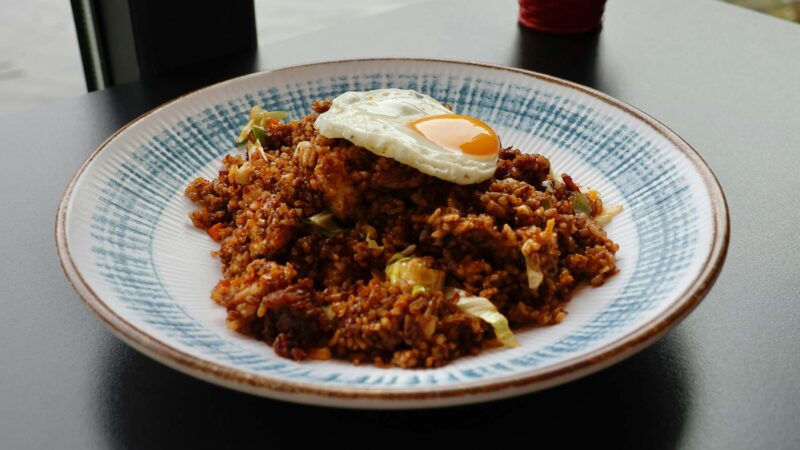
Nasi goreng literally means “fried rice” and is probably one of the best-known Indonesian dishes. It is prepared by frying cooked rice with vegetables, garlic, shallots, sweet soy sauce and spices.
However, nasi goreng is not automatically vegetarian. It is very commonly prepared with chicken, shrimp, egg or pieces of meat. Some versions also contain shrimp paste. If you are vegetarian, ask for nasi goreng sayur, which means vegetable fried rice, and specify that you do not want meat or seafood. If you are vegan, remember to ask for the dish without egg as well.
You can say: “Nasi goreng sayur, tanpa daging, tanpa ayam, tanpa ikan dan tanpa telur, ya.” This means: vegetable fried rice without meat, chicken, fish or egg.
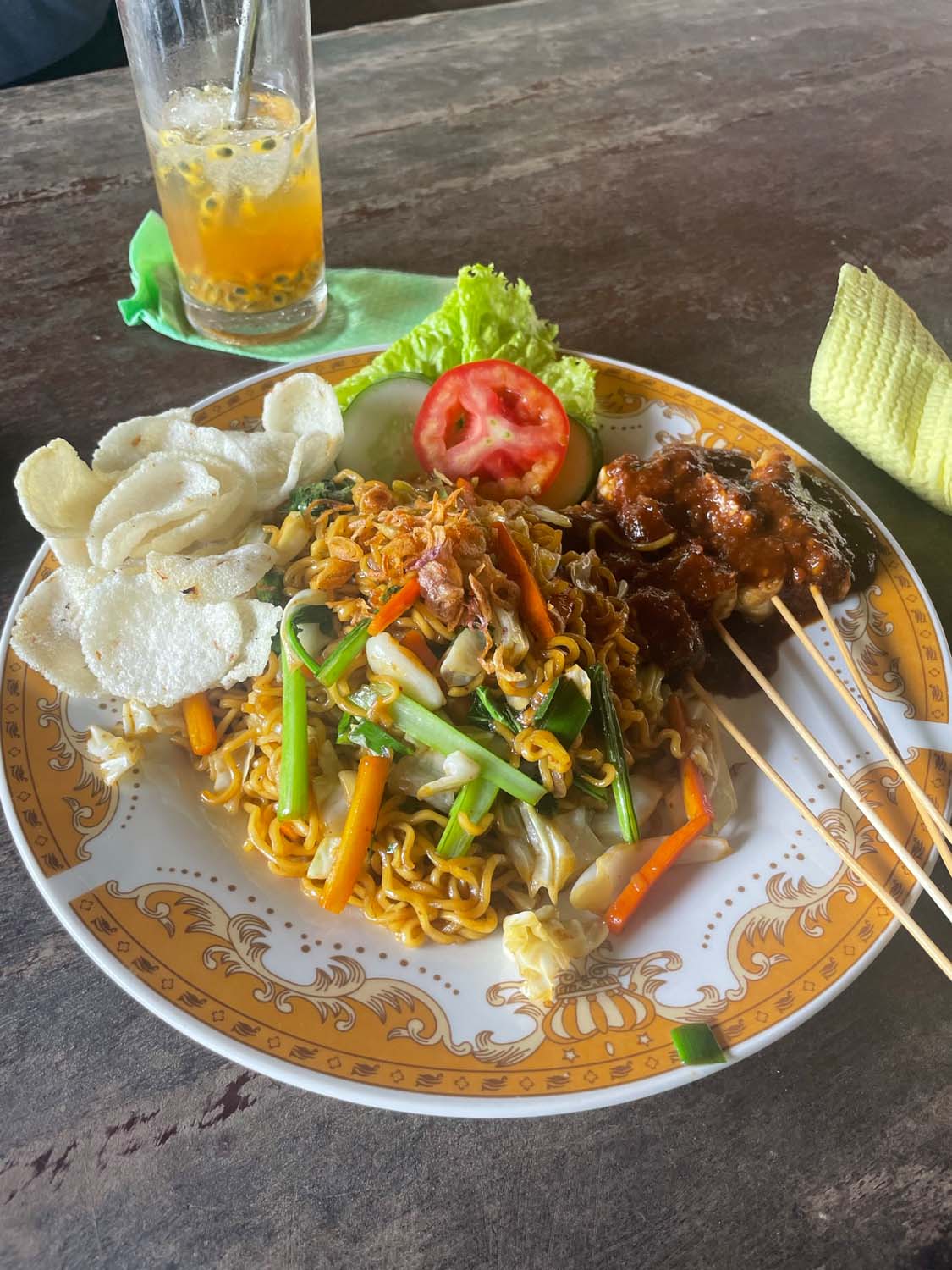
Mie Goreng with saté skewers
Mie Goreng – Fried Noodles
Mie goreng is the noodle equivalent of nasi goreng. Yellow noodles are stir-fried with vegetables, soy sauce and spices and are often served with chicken, shrimp or egg.
Again, the word “sayur” is your friend. Mie goreng sayur means vegetable fried noodles. For a vegan version, ask for it without egg and make sure the cook does not add seafood or meat.
Within Sumatra there is also different variations of Mie Goreng. Mie Aceh from Banda Aceh in the North contains of thick yellow noodles served with slices of beef, lamb, or seafood. They are served in rich, hot and spicy curry-like soup. While mie goreng is usually made with soy sauce, Mie Aceh is fried with a variety of spices such as cardamom, caraway, cumin and star anise. Furthermore there is Mie Belitung, served on the island of the same name. Belitung is a fishing island, so this dish contains seafood like shrimp, fried fish or fish sauce. The broth is made of spices like candlenut, ginger, galangal, and red onion, and may be added with tofu, and bean sprouts.
Other variations are Kwetiau goreng which contains flat rice noodles or Mie rebus (noodle soup).
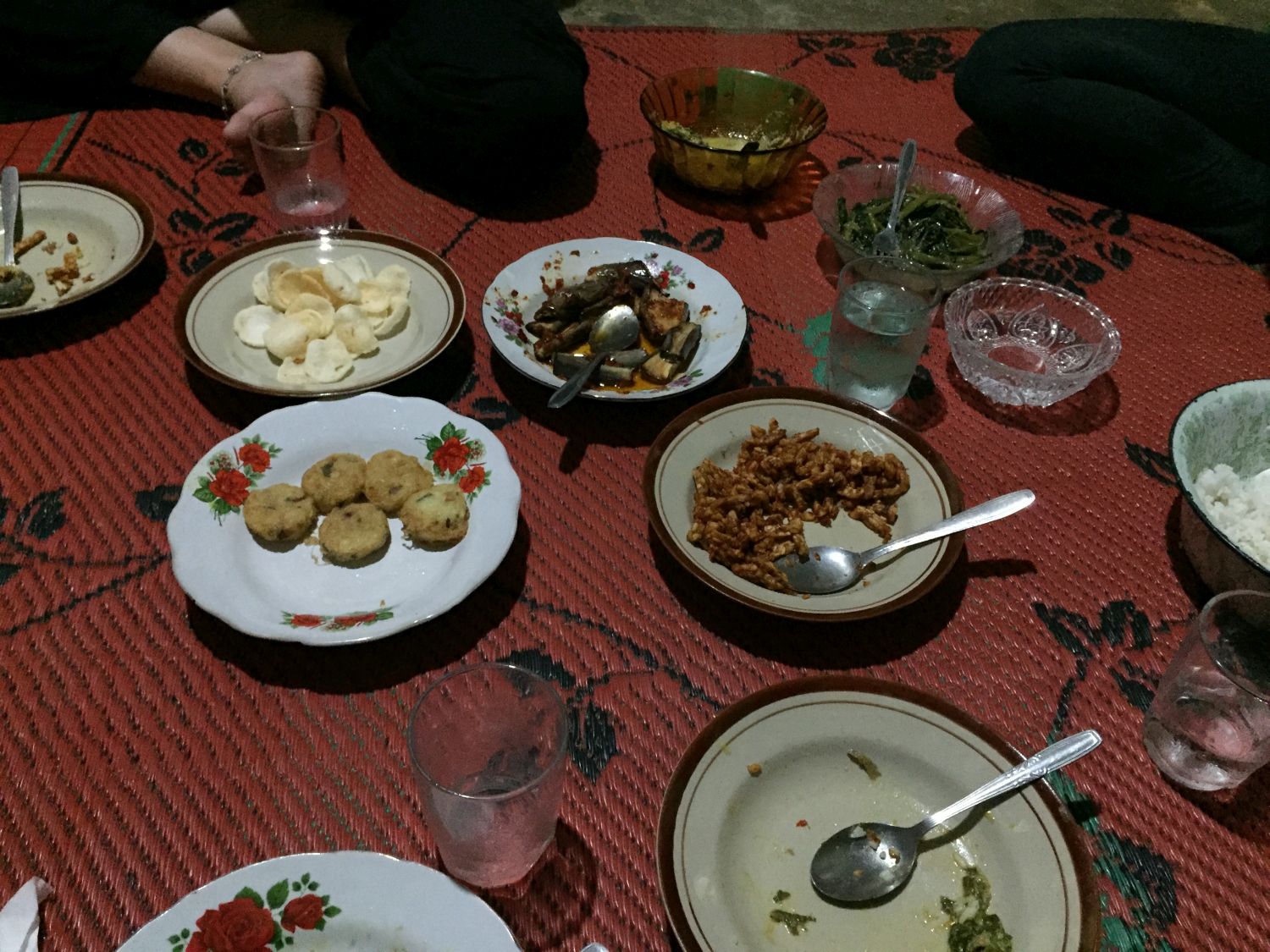
Nasi Padang – A Feast of Small Dishes
Nasi Padang is one of the great culinary experiences of Sumatra. It originates from the Minangkabau culture of West Sumatra and has become famous throughout Indonesia.
At a Padang restaurant, you usually order rice and choose from a large selection of dishes displayed in the front of the warung. You might see curries, vegetables, tofu, tempeh, potatoes, eggs, chicken, beef and fish. The dishes can be very spicy as locals love it and are often rich in coconut milk and spices.
Vegetarians can usually find several suitable dishes, particularly vegetable preparations, perkedel (potato cake), tofu and tempeh. However, be careful with sauces and curries. Some may contain meat, fish or shrimp paste even when there is no obvious meat in the dish.
A useful question is: “Ini ada daging atau ikan?” (“Does this contain meat or fish?”). If you are vegan, you should also ask about egg.
Rendang – More Than Just Beef
Rendang is perhaps the most famous dish from West Sumatra. Traditionally, it is made by slowly cooking beef with coconut milk, chilies and a complex mixture of spices until the liquid has almost completely disappeared. Because of its popularity, you may sometimes find versions made with chicken, duck, vegetables, tofu or egg.
Traditional beef rendang is obviously not vegetarian, but some restaurants also offer vegetable or egg rendang. These can be excellent alternatives, although they are not available everywhere.
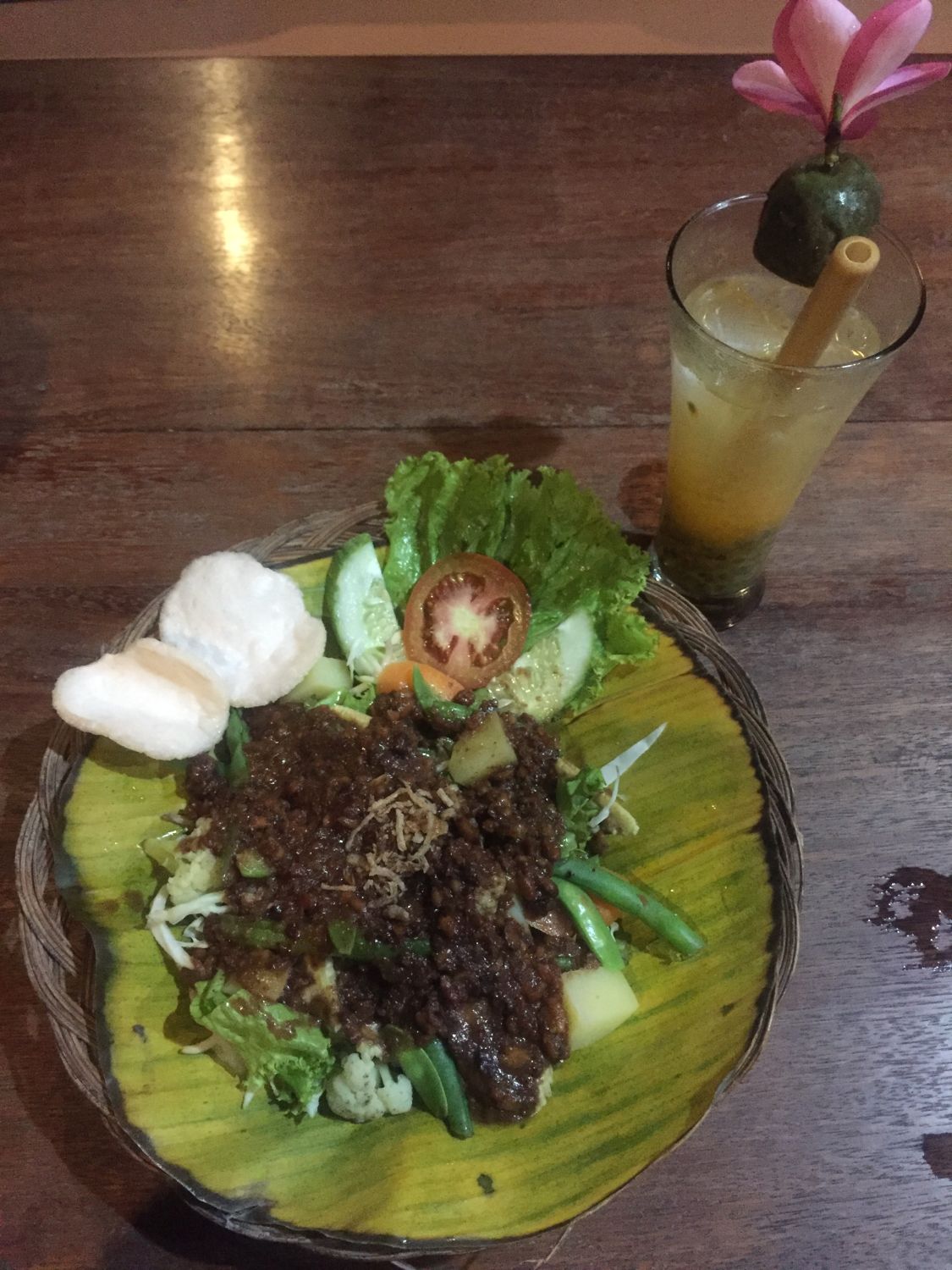
Gado Gado
Gado-Gado – One of the Best Vegetarian Choices
Gado-gado is a mixed vegetable salad served with a rich peanut sauce. It usually contains boiled or steamed vegetables, tofu, tempeh and sometimes potato. It is one of the easiest Indonesian dishes to order as a vegetarian.
However, gado-gado can sometimes be served with egg, so vegans should check before ordering. The peanut sauce itself is usually plant-based, but recipes can vary, so it is worth checking if you are strictly vegan.
Pecel – Noodles with Peanut Sauce
Pecel is another excellent choice for vegetarians. It consists of noodles, boiled vegetables served with a spicy peanut sauce. It is particularly common in Java and can also be found in different forms in Sumatra. Be aware: The sauce can be super spicy. If you are unsure, ask for the sauce to be put separately.
As with gado-gado, check whether the accompanying ingredients contain egg or other animal products if you are vegan.
Cap Cay – A Simple Vegetable Stir-Fry
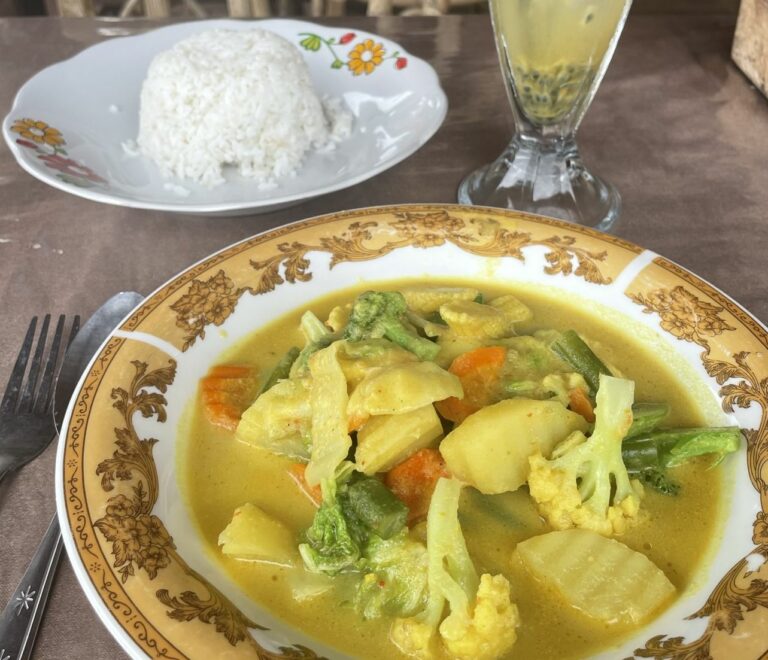
Cap cay is a popular Chinese-Indonesian vegetable dish that you will find on many restaurant menus in Sumatra. It usually consists of a mixture of vegetables such as cabbage, carrots, cauliflower, broccoli and green beans, stir-fried with a light, savory sauce. Depending on the restaurant, it may also contain chicken, shrimp, meat or egg.
Cap cay sayur is usually the best option for vegetarians. If you are vegan, ask for “cap cay sayur tanpa telur, tanpa ayam dan tanpa udang” – vegetable cap cay without egg, chicken and shrimp. It is also worth checking whether the sauce contains oyster sauce or other seafood-based ingredients, as these are sometimes used in Chinese-Indonesian cooking.
Bakso and Soto – Two Indonesian Classics
Bakso and soto are two of the most popular comfort foods you will encounter in Indonesia. Bakso is a hearty noodle soup with meatballs, usually made from beef, although chicken and fish versions are also available. It is commonly served with noodles, vegetables, tofu and a flavorful broth. If you are vegetarian or vegan, bakso is generally not suitable unless a specific plant-based version is offered.
Soto is a broad family of Indonesian soups, with recipes varying considerably from region to region. The broth can be clear, yellow and turmeric-based, coconut-milk-based or richly spiced, and it may contain chicken, beef, egg, noodles or vegetables. When ordering soto, it is worth asking what is in the particular version being served. Vegetarian versions are available in some restaurants, but you should check whether the broth contains meat or chicken stock. For vegans, also check for egg and other animal-based ingredients.
Tempeh and Tofu Are Everywhere
Indonesia is a fantastic destination for anyone who enjoys tofu and tempeh. Tahu means tofu, while tempeh is a traditional Indonesian food made from fermented soybeans. Tempeh has a much firmer texture and a nutty flavor and is an important source of protein in Indonesian cuisine. You will find both in many warungs and restaurants, often fried, grilled or cooked with different sauces. Look for tahu goreng (fried tofu) and tempe goreng (fried tempeh).
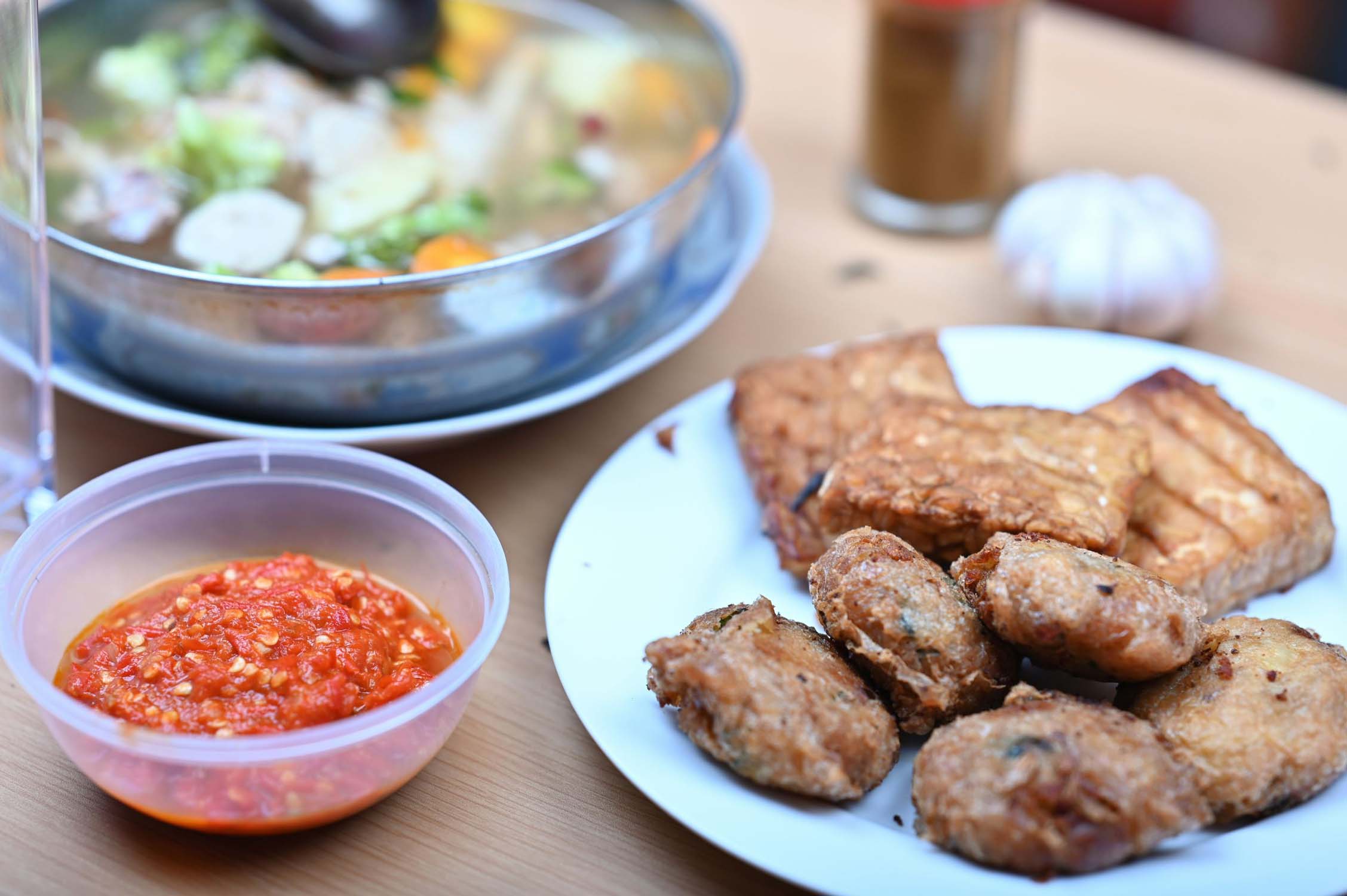
Tempeh, Perkedel and saus sambal
Saus Sambal
If you like spicy food, you are going to love sambal. Sambal is a broad term for Indonesian chili sauces and there are countless varieties. Some are fresh and simple, while others are cooked and much more complex. Some dished are also served with sambal, like Tempeh Sambal (Tempah with sambal sauce and rice) or Ayam Sambal (Chicken with sambal sauce and rice).
What about Fish Sauce and Shrimp Paste?
One of the biggest challenges for vegetarians and vegans in Indonesia is that animal products are not always visible. Shrimp paste, fish sauce and dried seafood are often used as flavoring rather than as the main ingredient. This means that a vegetable dish can still contain seafood. However, these sauces are usually only used in regions by the sea.
What Does “Ayam”, “Daging” and “Ikan” Mean?
A few basic Indonesian food words can make reading menus much easier.
- Ayam means chicken.
- Daging usually refers to meat, particularly beef.
- Ikan means fish.
- Udang means shrimp or prawns.
- Sapi means beef or cow.
- Babi means pork (only around Lake Toba).
- Telur means egg.
- Tahu means tofu.
- Tempeh means tempeh.
- Sayur means vegetables.
- Nasi means rice.
- Mie means noodles.
Learning these words means you can often work out the main ingredients of a dish even when the menu is only available in Indonesian.
Warungs – Where Locals Eat
A warung is a small, usually family-run restaurant or food stall and one of the best places to experience everyday Indonesian food. Warungs range from a simple roadside counter with a few dishes to surprisingly comfortable little restaurants. Prices are usually inexpensive, portions are generous and the food is often freshly prepared or cooked throughout the day.
Many warungs do not have an English menu, and some do not have a menu at all. Instead, you may find several prepared dishes displayed behind a glass counter. You simply choose what you would like, or ask the staff or your guide to recommend something. Don’t be surprised if the selection changes from day to day – this is part of the charm of eating at a warung.
For vegetarian and vegan travelers, warungs can be particularly useful because you can often see the ingredients before ordering. However, it is still important to ask about meat, fish, shrimp paste and sauces, as these may be used in otherwise vegetable-based dishes.
Sumatran Food Is Regional
One of the great things about traveling through Sumatra is that the food changes as you travel.
West Sumatra is famous for its Minangkabau cuisine and dishes such as rendang and various spicy curries. Around Lake Toba, you will encounter Batak cuisine, while in North Sumatra you will find influences from the many different ethnic communities living on the island. This means that there is no single “Sumatran cuisine”. Food traditions vary considerably from one region to another.
Don’t be afraid to try something you have never heard of. Some of the best meals you will have in Sumatra may come from a small local warung rather than a restaurant listed in a guidebook.
Don’t Expect Every Menu to Look Like a Western Menu
In many local restaurants, especially small warungs, there may not be a traditional menu at all. You might simply see a counter filled with prepared dishes. In this case, you can point at what looks interesting and ask what it is.
A simple “Apa ini?”, meaning “What is this?”, can be the beginning of a very enjoyable culinary discovery. And if there is a language barrier, don’t worry. A smile, a little patience and Google Translate can go a long way.
Vegetarian and Vegan Food in Sumatra
Vegetarian and vegan travelers can eat very well in Sumatra, but you should not assume that “vegetable” automatically means vegetarian. The safest approach is to ask questions, especially when eating in small local restaurants. Dishes based on rice, noodles, vegetables, tofu, tempeh and coconut milk provide plenty of possibilities.
If you are vegetarian, traveling in Sumatra is generally straightforward once you know what to look for. If you are vegan, you may need to be a little more careful about eggs, fish sauce, shrimp paste and meat-based stocks.
And don’t worry if you have to explain yourself more than once. Food is deeply connected to culture in Sumatra, and people will often be genuinely interested in why you eat differently.
Read also: Sumatra for vegetarians and vegans
The Best Way to Experience Food in Sumatra
Don’t limit yourself to restaurants aimed at tourists. Some of the most memorable food experiences happen in small family-run warungs, at local markets or during a meal with a Sumatran family.
Try the dishes you recognize, but also be adventurous. Ask your guide or a local what they recommend and let them introduce you to dishes you might never have discovered on your own.
After all, food is not just something you eat while traveling through Sumatra. It is one of the best ways to understand the island, its people and its different cultures.
Photos:
You Le on Unsplash
ochimax studio on Unsplash